

Quick Overview
- Filing for divorce in Ontario involves two mandatory court payments, $224 when the application is issued and $445 when the Affidavit for Divorce is filed, bringing the total to roughly $679 including the federal fee, separate from any legal fees
- Cost varies enormously depending on whether the divorce is contested or uncontested, published survey data shows well over a tenfold difference between the two
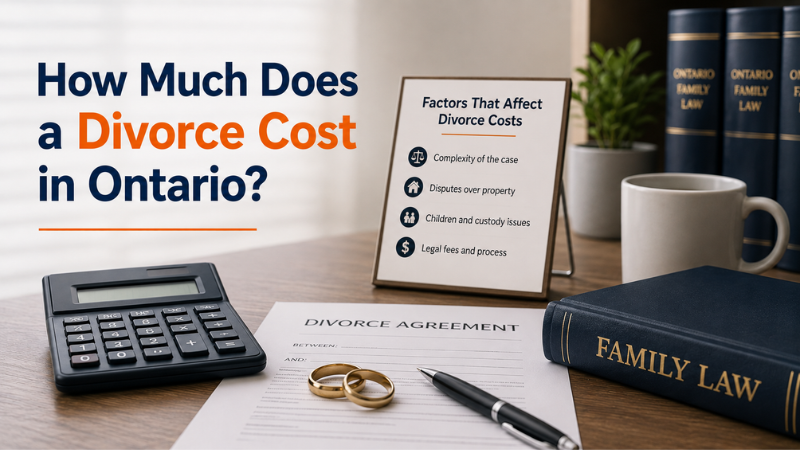
- Complex assets, high-conflict parenting disputes, and uncooperative parties are the biggest drivers of higher legal costs
- Extra experts like pension valuators, parenting assessors, or forensic accountants can add thousands more in specific cases
- Legal Aid Ontario, unbundled legal services, and court-connected mediation all exist as ways to reduce the financial burden
- Mediation is consistently far less expensive than litigation, sometimes by a wide margin, according to published cost comparisons
The Fees Everyone Pays, No Matter What

Legal fees aside, Ontario charges a set of mandatory court costs just to get a divorce moving. Issuing the Application for Divorce costs $224. A further $445 is payable when the Affidavit for Divorce is filed asking a judge to grant the divorce order, a step required in virtually every divorce, uncontested ones included. On top of that, a $10 federal fee goes to the Central Registry of Divorce Proceedings, which checks whether another divorce involving the same two people is already active anywhere in the country. That brings the mandatory court total to roughly $679 before any legal fees. Contested cases that proceed to motions, conferences, or a trial incur additional court fees on top. A handful of smaller administrative fees show up too, certificates, certified copies, that sort of thing.
People who genuinely can’t cover these costs can apply for a fee waiver through the court. It covers most provincial charges. It doesn’t cover the federal registry fee though, or anything a judge later orders paid to the other side.
Same Word, Wildly Different Price Tags
Here’s where most of the confusion actually comes from. An uncontested divorce, where both spouses already agree on property, support, parenting, everything, turns into a mostly administrative process. Paperwork gets filed, the required separation period passes, a judge signs off, no hearing needed. A contested divorce looks nothing like that. Financial disclosure, case conferences, motions, sometimes a full trial, each spouse needing their own lawyer because their interests genuinely diverge.
Published fee survey data shows just how far apart these two paths actually land. The Canadian Lawyer Legal Fees Survey puts the average uncontested divorce in Ontario at roughly $1,400. A contested one averages tens of thousands. A multi-day trial can push well past $50,000 in legal fees alone. Worth being clear here, these are general survey averages from across the profession, not quotes tied to any specific firm. Actual costs shift based on the specifics of each case.
What Actually Pushes the Cost Up
Lawyers typically bill by the hour, so anything adding hours adds dollars. Corporate holdings, family trusts, self-employment income, these all mean more disclosure and more analysis. Fighting over an asset valuation date, or tracing property one side claims should be excluded, usually pulls financial experts into the mix too.
High-conflict parenting disputes sit near the top of the expense list, especially once allegations of alienation or family violence enter the picture, since those tend to trigger clinical assessments or urgent motions. And honestly, how the two people behave matters just as much as what they’re fighting about. Cooperative disclosure and reasonable negotiation keep a case contained. Delayed responses, repeated motions, flat refusal to negotiate, any of that can stretch a case out and multiply the final bill several times over.

The Extra Experts That Add Up Fast
Legal fees aren’t the only cost. Certain situations pull in outside professionals, and those bills land directly on the people involved. Pensions being divided require a formal valuation from the plan administrator, with fees capped by regulation, generally a few hundred dollars depending on the pension type.
Parenting assessments sit in a different category entirely. Courts only order these in genuinely high-conflict situations where expert input seems truly necessary, and the work involved, clinical interviews, record reviews, observations, is extensive. A standard assessment typically runs into the thousands, sometimes considerably more in especially complex cases. A narrower option focused just on a child’s perspective, often called a Voice of the Child Report, tends to cost noticeably less.
Hidden assets, business valuations, disputes over real income for support purposes, these can all bring forensic accountants into a case too, and their specialized rates reflect that.
Real Ways to Reduce the Financial Burden
A few structured options exist specifically for people who can’t take on a full traditional retainer. Legal Aid Ontario offers duty counsel and, for those who qualify financially, certificates that fund a private lawyer for specific matters. Eligibility comes down to income and a fairly modest asset threshold. Thresholds have shifted recently too, so it’s worth checking current numbers directly with LAO rather than going off older figures.
For people who don’t qualify for legal aid but still can’t justify an open-ended retainer, unbundled or limited scope legal services fill the gap. A lawyer handles specific pieces, reviewing an agreement, drafting one document, coaching someone through a motion, while the person otherwise represents themselves. Ontario maintains a directory connecting people to family lawyers who offer exactly this kind of service. This is often exactly what someone means when searching for an affordable divorce lawyer in Ottawa, not necessarily the lowest possible price, but a way to get real legal input without committing to a full, open-ended retainer.
Mediation Usually Costs Far Less
Choosing to settle things outside a courtroom makes a real financial difference. Mediation, where a neutral third party helps two spouses reach their own agreement instead of a judge imposing one, consistently comes in dramatically lower than contested litigation in published cost comparisons, sometimes a small fraction of what a fully litigated case runs.
Ontario also runs court-connected mediation, including free, limited on-site sessions for people already at the courthouse for a scheduled hearing, plus subsidized off-site mediation priced on a sliding scale tied to income. Anyone who qualifies for Legal Aid can often access this mediation entirely free.
It Really Comes Down to Choices, Not Just Circumstances
The single biggest factor in what a divorce ends up costing isn’t the marriage itself, it’s how the two people involved choose to handle disagreement. Two spouses with nearly identical assets and similar disputes can walk away with completely different bills, depending purely on whether they cooperate, negotiate, or dig in for a long fight. Anyone weighing mediation against an uncontested filing or a fully litigated divorce tends to benefit from an early conversation with a Divorce Lawyer in Ottawa, someone who can realistically map out what their specific situation is likely to involve before costs start piling up.
FAQs
How much does it cost just to file for divorce in Ontario?
Issuing the application costs $224, but the full mandatory court total, including the Affidavit for Divorce fee and the federal registry fee, comes to roughly $679, separate from any legal fees a lawyer might charge for handling the paperwork or negotiations.
Is an uncontested divorce really that much cheaper?
Yes, published survey data shows uncontested divorces averaging in the low thousands, compared to tens of thousands for a fully contested matter.
Can I get help paying for a divorce if I can’t afford full legal fees?
Possibly. Legal Aid Ontario offers income-based support, and unbundled legal services let you pay for only specific tasks rather than a full retainer.
Does mediation actually save money compared to going to court?
Generally yes, published cost comparisons consistently show mediation costing significantly less than contested litigation for most couples.
What makes a divorce more expensive than average?
Complex assets, high-conflict parenting disputes, and a lack of cooperation between spouses are the most common reasons costs climb well above typical ranges.
Summary
The cost of a divorce in Ontario comes down more to the path taken than the marriage itself. Mandatory court fees, roughly $679 in total, apply to everyone, but legal fees swing enormously between an uncontested filing and a fully contested court battle, with published data showing a substantial gap between the two. Complex assets, parenting disputes, and how cooperative both spouses are all shape the final bill considerably. Legal Aid, unbundled legal services, and mediation all exist specifically to make the process more manageable for people who can’t or don’t want to take on a full litigation budget. The figures referenced here reflect general published survey and court data, not fees quoted by any particular firm, and actual cost depends entirely on individual circumstances.
This article is intended for general information purposes only and does not constitute legal advice. Fee figures referenced are drawn from published court fee schedules and industry survey data, not from LMS Lawyers’ own fee structure, and are provided for general informational context only. This article does not create a lawyer-client relationship between LMS Lawyers and the reader. For advice specific to your situation, including current fee information, please consult a licensed lawyer.